
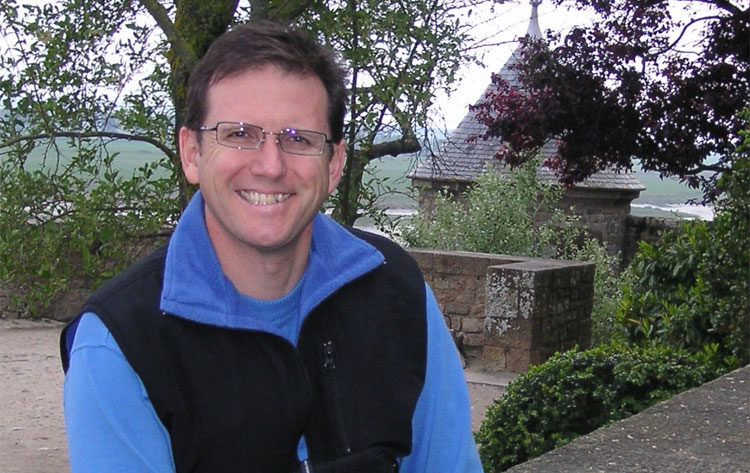
Mark Pittorino
My beautiful husband died on 28 May 2013 of an aggressive brain cancer (Glioblastoma Multiforme or GBM) at the young age of 49 (only 14 months after initial diagnosis) leaving behind myself and two beautiful children then aged four years and 18 months. Needless to say we miss him every day.
There is very little hope for those diagnosed with a GBM. It is an insidious, relentless and highly aggressive disease. There is currently no cure. The treatment options are limited and in many cases don’t prolong survival time beyond average survival of 15 months. During that time most patients often have to undergo more than one surgery.
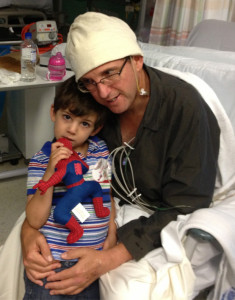
Mark had his tumor resected 3 times. It was not an easy ride and he bore it with the utmost courage and humility. In Mark’s case the cancer just got more and more aggressive despite the radiation therapy (which he underwent twice) and chemotherapy.
I remember clearly the moment Mark’s neurosurgeon broke the news to us about the pathology of Mark’s tumor and the words no one wants to hear – “there is no cure”. I was suffocating in silent terror. I didn’t realize back then that he (but it felt like we) had been handed a death sentence. But Mark, with his usual pragmatic, happy go lucky attitude went on with life like he was going to live. Six months after his initial resection he returned to work astute and sharp as ever. He continued golf and tennis, sports he loved, on a weekly basis. He later would reflect to a close friend that his last year, having spent a good proportion of it with his family and doing the things he loved, was the best year of his life.
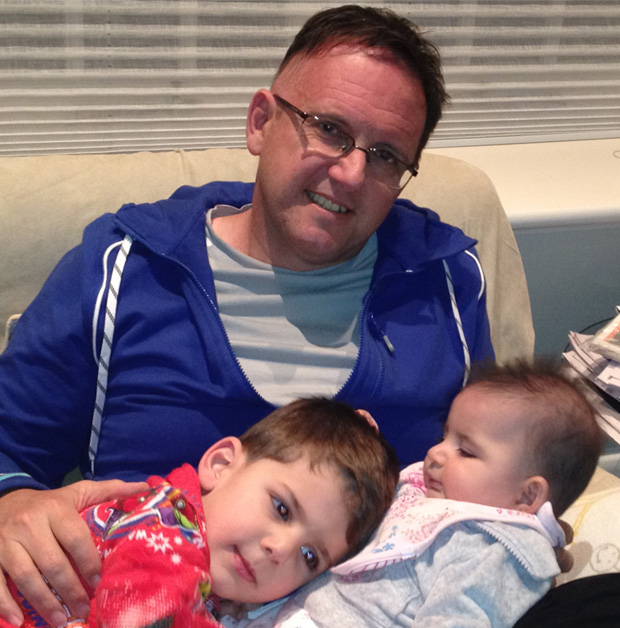
He was strong, fit and healthy and had a great attitude. I told myself, if anyone could beat this, he could! But he couldn’t because this thing is unbeatable. Less than 3 percent of patients survive aggressive brain cancer beyond 5 years.
It’s unbeatable because we know so little about brain cancer and its causes. In the research stakes advancements towards a cure for brain cancer lags more common cancers like breast and bowel by some 20 years. It is significantly underfunded but contributes to more lives lost and costs more per patient than any other cancer.
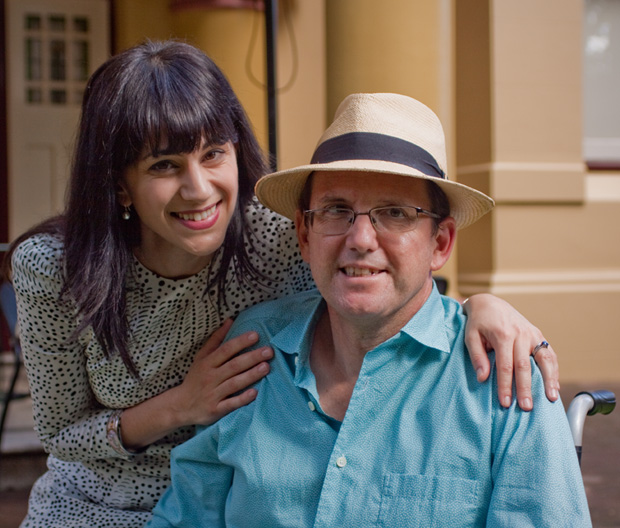
I am so grateful that we were able to take care of Mark at home till the end where he was always surrounded by his children, family and friends. It was an intensely sad but beautiful time. That was one of the things that surprised me about Mark’s death – the range of emotions. The grief was wrenching but there were good things too, many of which were positive and joyful. Mark, the children and I were able to find that place together.
A brain cancer diagnosis is terrible; research is the only thing that can combat this disease – research and HOPE!
Nola, James and Sienna Pittorino
Michele
On May 28, 2015 at 11:19 am
Beautiful words Nola and great initiative. I miss Mark a lot.